Home-visit physiotherapy
Physiotherapy for older adults
Support with strength, balance and everyday mobility, at home or in a care home—including care adapted for people living with dementia.
Visiting homes and care homes across South Birmingham and North Worcestershire. Check your postcode
Who we can help
For older adults who want to stay steady, active and as independent as possible, and for the families and care-home teams who support them. Many of our first conversations are with a son, daughter or carer.
People often get in touch when:
- Someone feels less steady, or is worried about falling
- A fall has knocked their confidence
- Getting up from a chair, the bed or the floor has become harder
- They are walking less, or feel weaker after an illness or a spell in hospital
- The stairs, bath or shower have become difficult
- Dementia is starting to affect how they move or manage day to day
What the first visit involves
The first visit is unhurried and shaped around the person:
A conversation with the person, and with family or care staff if they would like, about what has changed and what matters most
An assessment of strength, balance and walking, and of everyday movements such as standing up, turning and the stairs
A look at the home or room itself: chairs, bed height, walking aids and anything that could make a fall more likely
A clear plan with simple exercises, and practical advice on equipment or small changes around the home
If mobility is very limited
We can assess people with very limited mobility, including those who are bedbound. At the first assessment, we’ll discuss what physiotherapy may realistically help with and whether it is the right service for their needs.
If someone needs a lot of help to move, please talk to us before booking so we can understand their needs and plan the visit safely.
How treatment can help
Sessions build the strength, balance and confidence needed for everyday life, using a sturdy chair, the stairs and daily routines rather than gym equipment. Progress is made in small steps, at the person’s pace.
Because Max carries out every appointment, the person sees the same familiar face each time, and each visit builds on the last.
Care adapted for people living with dementia
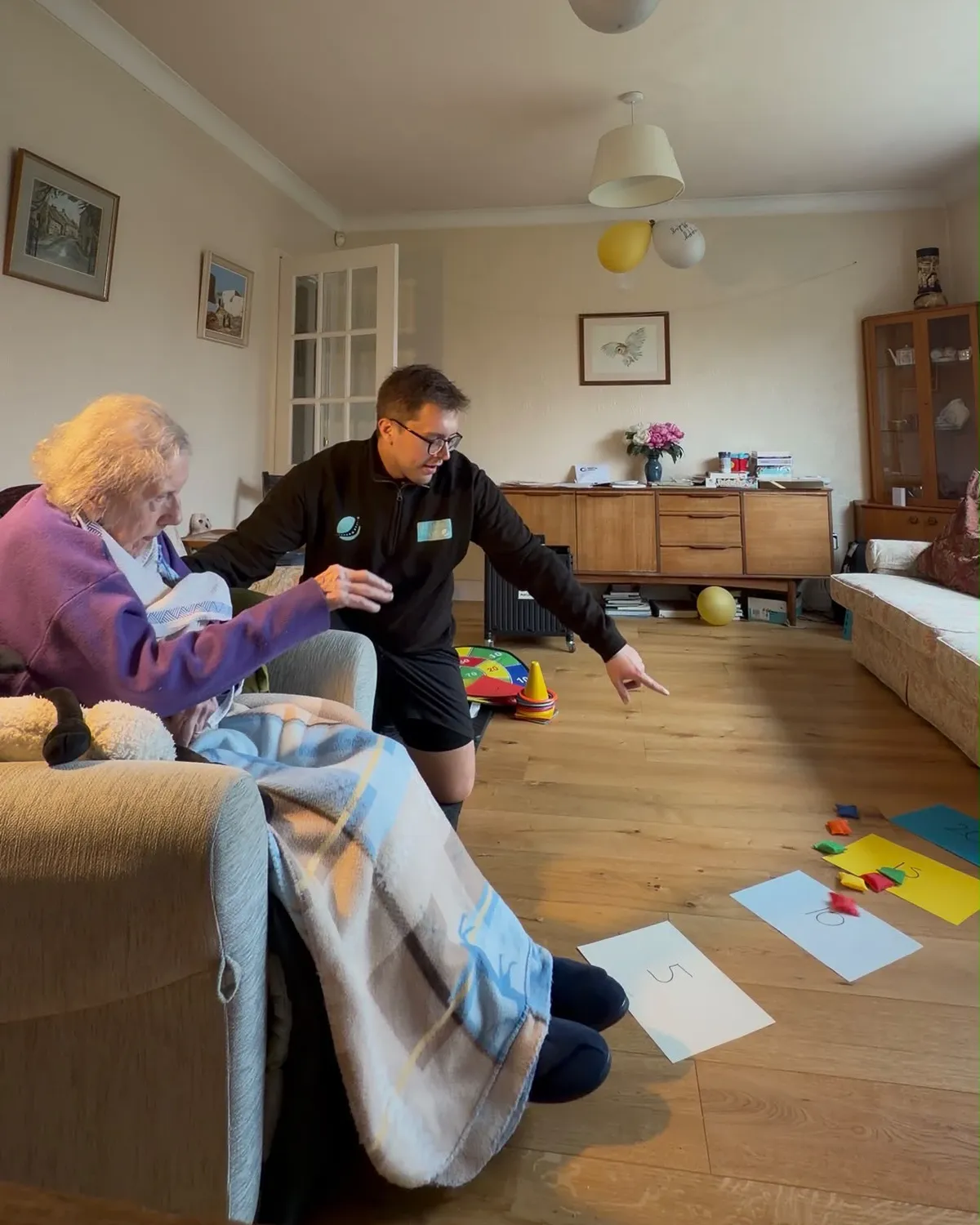
Physiotherapy does not treat dementia itself, but it can help someone keep moving, stay as steady as possible and take part in the everyday activities they value. We work by:
- Going at the person’s pace, with clear, simple explanations
- Fitting sessions around familiar routines and surroundings
- Adapting each session to their abilities and how they feel that day
- Using meaningful movement and everyday activities, sometimes games that combine movement with thinking skills
- Involving family and care-home staff, so practice can carry on between visits
 Google Reviews
What patients say
Max has been attending my very elderly parents weekly for a number of months now and I can wholeheartedly recommend his services. He is very personable and utterly trustworthy, I have watched him interact and work with my parents and he does so with skill and kindness. He is successfully helping them maintain and improve their mobility and they enjoy his visits. As a family we are so happy that we found Max.
Common questions
Can I arrange physiotherapy for a parent?
Yes. Many first conversations are with a son, daughter or other relative. We can talk through their needs with you, arrange visits and keep you updated.
Do you visit care homes?
Yes. We regularly see residents in care homes and coordinate directly with care-home staff, so arrangements are straightforward.
Can you help someone living with dementia?
Yes. Sessions are adapted to the person and to how they feel on the day, and we can show family or care staff simple ways to help between visits.
What if plans need to change?
Let us know as early as you can. Plans are adjusted around what is realistic and comfortable, and we ask for at least 48 hours’ notice to cancel or rearrange an appointment.
Not sure where to start?
Tell us a little about the situation and we’ll help you decide on the next step.